Kitchen Countertops Temecula, CA
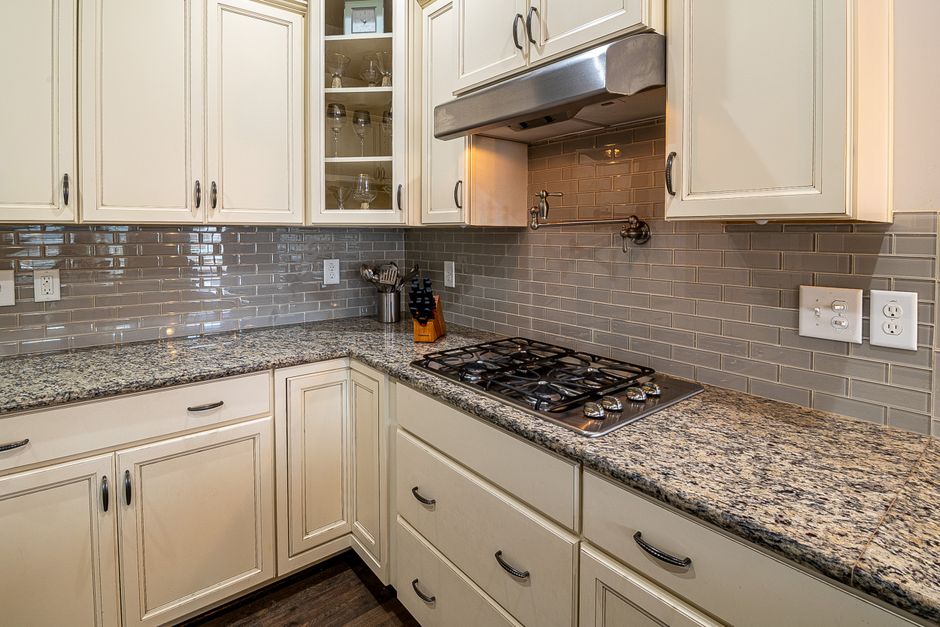
Plain notes on kitchen countertop installation in Temecula, CA: templating, slab choice, overhangs and what the crew checks before the stone goes in.
What We Cover
- Matching indoor counters to an outdoor kitchen What changes when the same stone has to work indoors and on a patio kitchen in Temecula weather.
- Choosing the slab and the shop before the cabinets close in How to pick a slab, check the whole slab in person and ask the right questions at a fabrication shop.
- Quartz or granite for a kitchen that bakes all summer How quartz and granite slabs handle Temecula heat, direct sun through big windows and heavy cooking.
- Removing old tile counters from a 1990s Temecula kitchen What demolition uncovers in older Temecula homes and how it changes the install schedule.
- What happens on template day for a Temecula open kitchen How the template visit works in a Temecula kitchen and what has to be ready before the fabricator measures.
- Overhang support for islands and wine bars How far a slab can hang past an island or entertaining bar and when it needs corbels or hidden steel.
Kitchen Countertops Temecula, CA
A kitchen in Temecula, CA does more work than most. It feeds a family on a weeknight, then turns into the gathering spot when friends come in from the Temecula Valley wine country with bottles and appetizers. The countertop takes all of it: hot pans, spilled red wine, knives, kids doing homework and a lot of elbows on the island.
How a crew looks at the job
Installing a countertop starts long before the slab arrives. The crew checks that the cabinets are level, that the walls are straight enough to template against, and that the sink, cooktop and faucet are chosen before anyone measures. A digital template then goes back to the fabrication shop, where the slab is laid out so the seams land in sensible places and the veining reads naturally across the room.
Materials that suit the area
Inland summers in Riverside County are long, dry and bright. Granite shrugs off heat and sun, quartz is easy to live with indoors and needs more care near strong windows, and quartzite sits between the two. Each one has a different edge profile range, a different habit with sealer and a different tolerance for a hot pan set down in a hurry.
Entertaining spaces and outdoor kitchens
Many homes here pair an indoor kitchen with a patio kitchen that looks toward the hills, the Santa Rosa Plateau or the vineyards. A wine bar or an island with seating adds overhang, and an overhang needs support. Outdoor counters add sun, rain and drainage to the list, and the stone has to be picked with that in mind.
Guides
The pages here cover template day, quartz and granite in summer heat, overhangs for islands and bars, outdoor kitchen counters, removing old tile and choosing a slab and a shop. Each one stays on a single question and explains what the crew checks and why.
Latest Guides

Caring for a new stone countertop in Temecula: the questions that come up
The day a new countertop goes in, the kitchen looks finished. The real test comes over the next few years, with red wine on a Friday night, a hot roasting pan pulled out too fast and a summer of sun through the window. Most of the questions homeowners ask after an install are about care, and most of the answers depend on the stone. This page collects the questions that come up most for Temecula kitchens and answers them the way a fabricator or installer would at the counter.
How soon can the new counter be used after the install?
Light use is fine the same day. The adhesive under the slab and at the seams cures overnight, and most installers ask that nothing heavy sits on the stone for a day. A sink that has just been set under an undermount cutout should not be loaded with stacked dishes right away, since the epoxy holding it needs time. Granite and quartzite that were sealed on site need a day before water sits on them.
The silicone along the backsplash and the wall stays soft for a short while. Leave it alone, and do not scrub the joint for the first few days.
Does granite really need sealer?
Most granite is porous to some degree, and darker stones are usually denser than lighter ones. A simple test settles it for a given slab: put a few drops of water on the surface and watch. If the water darkens the stone within a few minutes, the stone is absorbing and wants sealer. If it beads and sits, the seal is working.
Sealer is a wipe-on product that soaks in and is wiped off. A kitchen that sees heavy use may want it renewed once a year, and a low-traffic stone may go much longer. The water test is a better guide than the calendar.
Why does quartz not need sealing?
Engineered quartz is ground stone mixed with resin and pressed into a slab, and the resin fills the pores. Water and wine have nowhere to go, so the surface resists stains without a sealer. The same resin is the weak spot with heat, which is why a hot pan on quartz can leave a mark that granite would not show.
What can take the shine off a stone?
Acid is the usual cause, and it matters most on marble and some soft stones. Lemon juice, vinegar, tomato sauce and wine all etch a calcium-based stone, leaving a dull patch where the polish has been eaten away. Granite and quartzite resist acid far better, which is why they are common choices for kitchens where citrus and wine are part of the routine. Soapstone is a different case, since it is chemically inert and does not etch, but it scratches and darkens over time and many people like the worn look.
Abrasive cleaners and scouring pads dull a polished surface slowly. A soft cloth and a mild soap handle most daily cleaning, and a stone-safe spray handles the rest.
How should red wine and other spills be handled?
Wipe a spill when it happens. On a sealed granite or on quartz, a spill that is wiped within the hour causes no trouble. On an unsealed or worn-seal surface, red wine, coffee and oil can leave a shadow that takes a poultice to lift. A poultice is a paste of absorbent powder and a mild cleaner, spread over the stain, covered with plastic for a day, then wiped away. It draws the stain back out of the stone.
Oil stains are common near the cooktop. They show up as dark patches that spread slowly. Catching them early, with soap and warm water, usually works. An old oil stain needs a poultice.
What about hot pans and baking sheets?
Granite takes a hot pot without damage in normal cooking. Quartzite does as well. Quartz does not, because the resin can scorch or discolour, and a hot baking sheet set straight on it can also crack the slab when the heat is uneven. A trivet or a thick board under every hot item solves the problem for every material. Porcelain slab handles heat well but is thin, so a sudden temperature change next to a cutout can stress the corner.
Cooktop cutouts and sink cutouts are the places where cracks start. A slab with a small hairline at a cutout corner usually means the cutout was cut tight, or the cabinet moved after the install. It is worth calling the fabricator soon, since a crack at a corner tends to run.
Why is there a visible seam, and will it get worse?
A seam is where two pieces of stone meet, and it will be visible to some degree on every long counter. A good seam is tight, flat and filled with a color-matched resin. It sits over cabinet and away from the sink and the cooktop. A seam that has opened up or feels uneven under the hand usually points to a cabinet that has shifted, or to a seam that sat over a weak spot.
Run a fingernail across the joint. A properly set seam catches the nail only a hair. If the edge feels like a step, ask the installer to come back, since a seam can often be re-leveled in a visit.
Is it safe to cut directly on the stone?
It will not harm the stone, but it will ruin the knife. Granite and quartz are harder than steel, so a blade dulls quickly on the surface. A cutting board protects both. The risk to the stone is mainly at a polished edge, where a dropped heavy pot can chip the corner. An eased edge or a bullnose resists chipping better than a sharp square edge.
What cleans best on a daily basis?
Warm water, a drop of dish soap and a soft cloth. A stone-safe cleaner, with a neutral pH, is fine for grease. Bleach, ammonia and strong glass cleaners can dull a sealer and in some cases the stone, so they belong somewhere else in the house. Dry the surface after cleaning to avoid water spots, which are most noticeable on dark honed stone.
Once a week, wipe near the sink and the faucet base, where mineral residue builds up. Temecula water is hard, and the white film that forms around a faucet is a mineral deposit. A cloth with a little vinegar removes it from a surface that will not etch, such as granite or quartz. Marble and soapstone need a mild cleaner instead.
What should be checked after the first year?
A short walk around the kitchen once a year catches small problems before they grow. Look at the silicone joints along the wall and the sink rim, since they shrink and pull away with time. Look at the corners of the cutouts for fine cracks. Run the water test on granite and see whether it has started to absorb. Check the edge along the island for chips.
Most of these are small fixes when found early, and large ones when ignored until the stone cracks. A kitchen cared for this way holds up for decades, and the counters look much like they did the day they were installed.

Laying out a Temecula kitchen for cooking and for company
A kitchen that gets used for a weeknight dinner and for a houseful of guests on Saturday has two jobs that pull in different directions. Cooks want the work triangle tight and the surfaces clear. Guests want somewhere to put a glass and somewhere to stand that is not in the cook's way. In the Temecula Valley, where a lot of hosting revolves around wine and food brought in from the patio, the counters decide how well that balance works. The stone itself matters less than where it sits, how wide it runs and what stands next to it.
Where should the work zones sit on the counter?
A kitchen has four jobs that need flat surface: prep, cooking, cleanup and serving. Most layouts that feel good put prep between the sink and the cooktop, because that is the route food takes. The prep run wants at least thirty inches of clear width, and a cook who chops a lot will want closer to forty. A run that is broken by a corner or an appliance garage stops being useful for rolling dough or breaking down a chicken.
Cleanup sits around the sink. The surface to the side of the sink takes the dish rack or the wet pots, so it is the one place where an unsealed or soft stone takes the most punishment. Granite and quartzite handle standing water better than marble, and a slab with a honed finish tends to hide water spots better than a polished one.
Cooking sits beside the range or cooktop. Leave a landing spot on each side, at least twelve inches, so a hot pan has somewhere to go that is not the stove grate. Heat tolerance matters here more than anywhere else. A trivet is a good habit with every material, and with engineered quartz it is a rule.
Is an island worth the floor space?
An island earns its keep when the room is wide enough to walk around it. The usual rule from cabinet makers is about forty-two inches of clearance on every working side, and nearer to forty-eight where two people cook together. Tighter than that and a dishwasher door or an oven door blocks the walkway.
The island is also where the counter earns its second job. A seating side asks for overhang, and overhang asks for support. A slab that runs ten or twelve inches past the cabinet needs nothing extra, but a bar that reaches farther needs a corbel, a leg or a steel bracket hidden in the cabinet frame. It pays to settle this before the cabinets are ordered, because a bracket that has to be added later needs cabinet reinforcement that is awkward to retrofit.
Here is how the common island arrangements compare for a household that entertains.
| Arrangement | Good for | Watch for |
|---|---|---|
| Island with seating on one side | Casual meals, guests who chat with the cook | Overhang support, stool legs catching the stone edge |
| Island with sink or cooktop in the middle | Cooks who face the room | Splash spread across the seating side, ventilation above |
| Island with a raised bar ledge | Keeping the mess hidden from guests | Extra seam where the two heights meet |
| Peninsula off the main run | Smaller rooms, one fewer corner to walk around | A stone corner that guests bump into |
| Two small islands | Very large kitchens, one for prep and one for guests | Two slabs to match, double the cutouts |
How does the layout change when the party moves outside?
Many Temecula homes open the kitchen to a patio through a wide slider or a pair of folding doors, and the line between indoor and outdoor counter blurs. A pass-through window with a ledge on the patio side lets the cook hand out plates without crossing the threshold. That ledge is exposed to sun and weather even when the rest of the counter is not, and it is the place where a granite or quartzite choice makes more sense than a resin-bound surface.
An outdoor kitchen set against the house shares walls and gas lines with the indoor one, and sharing a color family between the two counters keeps the view through the glass clean. The stone does not need to be identical. A granite on the patio with the same edge profile as the quartz inside reads as one design, and the edge profile does a lot of the visual work.
What do the sightlines from the patio show?
People standing outside look at the counter through the door. Whatever sits on it in the afternoon sun will be the first thing visible. A kitchen that looks across toward Temecula Creek or toward the hills of the Santa Rosa Plateau gets plenty of low evening light, and that light rakes across the surface and shows every mark in a polished finish. A honed or leathered surface is more forgiving of that angle, and it does not throw glare back at the cook.
Dark slabs show dust and water spots more than medium tones do. Light slabs show red wine more than dark ones, which matters in a kitchen where wine is part of the routine. A medium veined stone is the compromise that most households end up with after holding samples up to the window.
Where do the seams belong?
Long islands and L-shaped runs almost always need a seam, because a slab is only so long and has to fit through a door. Good seam placement follows a few habits. The joint sits over solid cabinet, never over a dishwasher or a sink cutout, because those weaken the stone around them. It stays away from the cooktop corner, where heat stress concentrates. And it lands where the veining can match, so that the pattern appears to run across the join.
The fabricator lays a paper or digital template over the slab and shifts it until the pattern lines up. A homeowner who stands at the shop and looks at that layout will catch a lot, such as a heavy vein that would end up directly in front of the seating or a pale patch that would sit under the faucet.
A waterfall edge on the end of an island needs its own piece, cut from the same slab so the vein carries down the side. It uses more stone and has to be planned from the start, since it changes how the slab is nested at the shop.
What goes wrong most often after the install?
The first problem is a layout that looked fine in the drawing and fails in the room. A stool that cannot pull out because the island sits too close to the wall is a common one. The fix after the fact is expensive, so test it before the cabinets go in: tape the island outline on the floor and walk through a mock dinner with the stools in place.
The second is a landing spot that is missing. A refrigerator with no counter within reach, a wall oven with nowhere to set a hot tray, a microwave with no ledge beside it. Each of these shows up the first week and bothers the cook for years. Walk through each appliance and ask where the food goes when the door opens.
The third is a decision about edge profile that looked right on a sample and feels wrong on a hip. A sharp square edge is clean and modern, and it also meets every hip and forearm that leans on the island. An eased edge softens that, and a bullnose softens it more. Hold the sample at counter height before choosing.
How should the stone choice follow the layout?
Pick the layout first and the stone second. A prep zone that gets cut and splashed on can take granite, quartzite or quartz. A cooking zone with heavy pans wants granite or quartzite, with a trivet for everything. A bar that holds wine and citrus wants a stone that resists etching, and that rules out marble unless the household accepts a worn, softly marked look. Soapstone and honed stones age by darkening and scuffing, and some households like that.
Sink and cooktop cutouts weaken a slab at the corners, and a clean cutout in a thick, strong stone survives for decades. A cutout in a brittle or thin stone, especially a porcelain slab, needs a shop that cuts it often and reinforces the corners.
Whatever the layout, the template visit is the point where decisions turn into measurements. Have the appliances on site, the sink chosen and the stools tried out, so that what gets traced is what will be used.